Water against soil never ever stops negotiating. Tides press and loss. Storm climbs probe for vulnerable points. Vessel wakes up knock bulkhead doors like constant mallets. If you build or sustain waterfront commercial assets, you live with that agreement on a daily basis. Steel slabs bow, wood wall surfaces creep, and concrete boards crack under steady bending. Soil fills, sheds toughness, and also tries to bring lots it need to never observe. In this particular setting, helical tiebacks and supports verify their market value since they bring in the ground aspect of the architectural device instead of the enemy you fight period after season.
I found out that course on a pier project along a salty river where the proprietor presumed "temporary" tiebacks from the 1990s still had life left. They performed, till a wintertime nor'easter incorporated along with a king tide. The wall surface failed to fail completely, however it dispersed good enough to jam a crane rail and stopped procedures for 2 full weeks. Restoring wasn't the tough part. Prodding procedures to phase devices five feet further landward during the course of setup was the actual struggle. Helical tieback anchor installment got five nights, along with torque monitored in real time, as well as the wall has kept within 3 millimeters of its alignment ever since. That work cemented a couple of methods I give every waterside retaining wall: validate ground records, design for cyclic running, presume water will be where you the very least anticipate it, as well as guitar the heck away from it.
What a Retaining wall Wants: The Bunch Path as well as the Weak Links
Bulkheads work as keeping wall structures along with water cheek by jowl and additional charge bunches on the other. In simple conditions, the panels or slabs take sidewise pressure, the wales and hats dispersed that load, and also the supports connect every little thing back to an even more steady block of ground. The tons pathway have to be very clear as well as undisturbed. When you find a wall structure bowing near midspan in between grains, or even when tie rod heads start to decay bleed, you're considering a load path that is actually either small or even compromised.
Helical tieback anchors settle a persistent beachfront issue: discovering reputable tension capability in dirts that vary, damp, as well as in some cases unconsolidated. A helical support is a steel shaft with one or more coils that helical pier installation methods screw right into the soil. The coil layers cultivate bearing in skilled strata while bum rap moves the stress back to the waler. Twist during the course of setup connects to holding ability. That singular simple fact creates helical anchors powerful near water where digging examination pits is dangerous and also driving typical anchors can easily reverberate via delicate structures.
In much older industrial internet sites, you'll still locate rod-and-deadman devices. They work when you have area behind the wall surface as well as secure ground for a concrete deadman. Yet "space behind the wall surface" is rarely on call on a revenue-producing beachfront where every square foot assists holding, storing, or rail. Helical tiebacks land straight because restriction. The tools impact is actually little. You can easily set up coming from the skin of the wall or even a narrow deck, and you can easily reach out to capacity without large excavations.
Where Helical Tiebacks Make Sense
I grab helical tiebacks in 3 recurring situations:
- Retrofits old hardwood or steel slab pile bulkheads where access behind the wall is restricted as well as you need to have to maintain operations live. New business bulkheads with poor to channel grounds in the upper 15 to 30 feet and also an experienced bearing layer deeper, usually dense sand or even frosty till. Projects requiring reduced vibration and also precise ability management, like near electricals, vulnerable buildings, or on boat docks with historic fabric.
That carries out not suggest helicals are actually common. In quite soft natural debris stretching deep without a trusted bearing level, a helical support can chase after torque without ever before locking in. In those ailments, micropiles or punched supports along with cement light bulbs might be the better answer. Similarly, if you count on massive fragments or even boulders, proceeding a helical with a cobble lens can be sluggish or illogical, and commercial micro pile installation or even commercial resistance pile installation might lead. The judgment phone call boils down to soil confirmation, constructability, and also the amount of water you may handle during the course of installation.
Soil, Water, as well as Reality Checks
The ideal technological delegation still crumbles if your dirt expectations mistake. On waterfronts, mundane logs age severely, and also periodic groundwater shifts dirt actions into a moving aim at. I prefer a two-pass approach. Initially, our team do traditional borings and CPTs at enough stations to brace the wall positioning. Second, our team alleviate the first half-dozen supports as instrumented probes. Our company log torque, seepage per change, as well as pore tension reactions at each helix altitude. When twist dives through a factor of pair of over a quick acumen, you understand you've struck density or even a concrete level. When twist stays shateringly reduced past awaited midsts, you know the concept needs to chase after a much deeper coating or even button to a distinct system.
Helical torque connection factors differ. Manufacturers as well as developers commonly use an empirical connection of ultimate ability equal to a numerous of setup twist. The several depends on pole type, helix setup, and also dirt training class. On waterfront ventures with combined stuffing, I maintain the protection margin conventional. If the layout calls for 80 kips per tieback, I as if to find a twist account that sustains 120 kips in the very same soil to represent periodic bunches as well as feasible scour. You can easily back off with evidence testing, yet I prefer to possess frame in the data than a comfortable fiction.
Water complicates whatever, especially when you pierce or disturb the soil matrix. One advantage of helical anchors is the lack of cement, which takes out a whole classification of water-related danger. But the water still impacts installment torque and lasting rust. I specify deterioration reduction allocations based upon salinity as well as oxygen accessibility, with fullness added to the shaft and hot-dip priming as a baseline. If the site combines fresh stormwater and tidal saltwater, corrosion can surpass desires considering that oxygen biking remains higher. In those zones, a polymeric finishing or propitiatory anodes may pencil out over the life process, and it deserves operating the numbers.
Designing the Tieback System, Certainly Not Only the Anchor
Anchors obtain the interest, yet tiebacks belong to an unit that includes the waler, the link hardware, the bulkhead panels, the backfill, and the deck or slab that rides on the top. I have actually switched out lots of supports that were actually still sound while the waler crack or even corroded around them.
Start with connection hardness. If the waler possesses sufficient offer, the anchor tons concentrate at the hookups closest to additional charges, as well as your wall surface disperses erratically. I choose continual steel wales with splice plates that leave behind no spaces at support sites. For hardwood grains on older wall structures, steel backing platters dispersed the tons and reduce crushing. Equipment details concern. Extra-large washing machines that appear reasonable in a submittal can leave you with prying activity and neighborhood bending. Suitable clevises as well as bearing platters do set you back additional, but they purchase on their own when you evidence exam and also the bunch transmissions easily without eccentricity.
Proof as well as performance testing of a portion of supports is not simply a carton to examine. On one bulkhead with 240 helical tiebacks, our team assessed 10 per-cent to 150 percent of design tons and also observed action designs that obliged us to adjust embedment midsts through 2 to 4 feet in a 3rd of the wall structure. That modification removed a disposable lens problem that will have steered routine maintenance for several years. The price of testing was actually a fraction of rework.
Construction Sequencing in the Wet Zone
The finest style can be undone by a hurried sequence. Beachfront jobs reside in tight windows directed through trends, allows, as well as procedures. I prepare around 3 truths: minimal access, changeable water levels, and rigorous ecological controls.
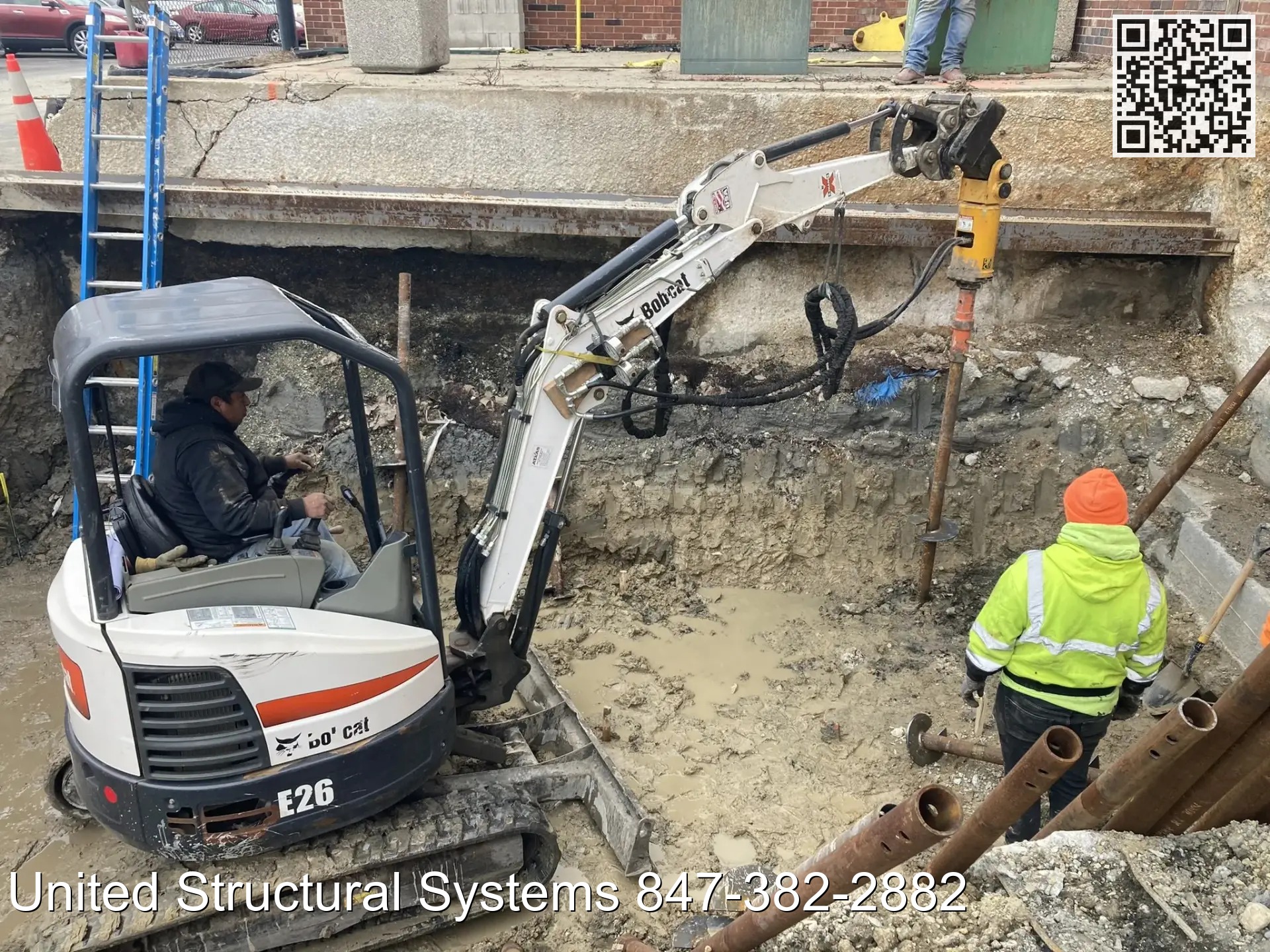
On gain access to, smaller sized equipment for commercial helical pile installation and commercial helical tieback anchor installation is a good thing. A mini-excavator or a portable monitor rig along with a high-torque head can easily twist supports into the ground with really good command and marginal disturbance. If the wall surface ends water, our team place the gear on a burst with a spud unit for stability. For landside accessibility, steel mats avoid trenching under the rig and keep the additional charge uniform.
Water levels impact setting up and safety and security. On tidal websites, I book set up bursts when the predicted low trend straightens with job hours, then guard the work deal with momentary barricades when the water gains. Where the wall surface water leaks, I possess the staff pre-stage pumps with redundancy. Pump failure during the course of a climbing trend can turn a dependable excavation right into a danger within minutes.
Environmental controls ought to have appreciation. Debris plumes are actually certainly not negotiable along with regulators, and also spill packages are certainly not optionally available. Hydraulic liquid in the water is a venture killer. We make use of biodegradable gas oils around water, and also we verify pipe disorder daily. It takes field, yet the choice is much worse.
Helical Tiebacks vs. Drilled Anchors vs. Deadman Systems
I maintain an easy mental comparison when suggesting managers. Helical tiebacks are fast, quiet, and also verifiable by means of twist and verification screening. They radiate in changeable grounds where an experienced coating is accessible and where you may not endure resonances. Pierced supports along with grouted bulbs supply higher capabilities in deep soft soils however demand stringent cement management, casings in loose areas, as well as more effort. Deadman as well as tie rods stay affordable when you possess real property responsible for the wall and also steady ground, though they contravene utilities as well as future growth. Mix as well as match as needed to have. I have integrated helical tiebacks along the majority of a line as well as punched supports in a short scope where natural down payments obliged the issue. The proprietor got the very best value without revamping the whole entire system.
When Micropiles Get into the Conversation
Micropiles and helical piles offer relatives of the same objective: locating capability in poor ground for tensile or even compressive requirements. On waterfronts, micropiles show up where the wall structure certainly not merely needs lateral restriction however likewise upright assistance for a cap or deck. If search threatens to weaken shallow groundworks, micropile installation enters into deep foundation repair, and also sometimes you tie the wall structure and deck along with a shared micropile grid. Micropiles carry higher lots along with tiny dimensions, and in an office environment they let you thread between energies. The compromise is slower creation and also the necessity for spoil control, housing, and cement verification.
Helical piles additionally carry compressive lots, and also for several commercial helical pile installation scopes they provide faster timetables with cleaner sites. If the geotechnical profile includes heavy sands or even tight clays at easily accessible depths, helical piles stick out. If not, commercial micro pile installation can pioneer. I often specify each on the exact same venture: helical tiebacks for the retaining wall's lateral system as well as micropiles or even resistance stacks for upright lots at crane shafts or fender piles.
Handling Activity, Monitoring, and Maintenance
Even a well-anchored wall surface actions. That's not failing; that's behavior. The question is how much, how quick, and whether it stabilizes. Our team established movement limits in each straight as well as upright directions. For commercial foundation stabilization, I have actually made use of thresholds like 0.5 inches total lateral action along with a regular cost restriction throughout building, then a much lower long-term price. Resonating cable strain determines on the wales and tons cells on an example of tiebacks provide records. Tilt sensing units at regular intervals inform you if the wall structure is actually turning as a device or even kinking between support aspects. Machinery sets you back a small amount of job market value and spares you from guessing at the reason when one thing looks off.
Maintenance preparing is actually not extravagant, yet it maintains worth. You really want obtainable anchor heads, preventive limits, as well as area to re-tension or even install extra components without restoring the wall. In acrid dash zones, arranged washdowns and visual surveys capture finish loss just before it ends up being a building complication. Where freeze-thaw cycles pump water right into splits, you integrate foundation crack repair at the limit as well as panel joints, sealing off and, when required, sewing along with complex wraps that shake off salt.
Resist the Temptation to Over-Anchor
It's easy to believe additional supports equate to additional protection. Not consistently. Over-anchoring can easily stiffen one sector of wall surface, shift lots roads, and also produce tension risers. I the moment consulted on a harbor where a mid-project improvement purchase included 30 percent even more supports in a 120-foot reach without adjusting the waler style. The result was waler suffering and local panel breaking under slight hurricanes because tons transactions concentrated at a handful of anchor points. The remedy was certainly not a lot more supports; it was a continual steel waler with proper tightness as well as far better space. Balanced bodies operate far better than brute-force quantities.
Tying Supports to the Much Bigger Groundwork Picture
Waterfronts are not single-purpose properties. You'll have buildings, conveyors, storage tanks, rail, as well as cranes all relying on the security of that side. Structural foundation repair inland often piles right into the exact same timetable, thus specified top priorities. If the bulkhead moves, the building piece near the upper hand will certainly relay the message through splits and also door misalignments. I've made use of resistance pile devices at the structure advantage, helical anchors at the wall surface, and also a pliable joint in between the 2 to ensure each device can easily relocate within a small selection without broadcasting stress and anxiety. That assuming falls under commercial foundation repair at its own absolute best: marry the right devices to the correct problem.
Resistance stacks are entitled to a mention. They are actually outstanding where headroom is actually minimal as well as you require to drive stacks utilizing the superstructure as reaction. For a retrofit stockroom abutting a bulkhead, commercial resistance pile installation permitted us to underpin bay columns along with minimal interior disruption, after that link piece edges with dowel pins while the wall structure acquired new helical tiebacks. The units went well with one another as opposed to fighting for space.
Construction Narratives That Shape Practice
On a Bay Shore venture, helix refusal took place at 18 feets where the borings predicted dense sand at 30 feet. Turns out an outdated riprap foot had actually slipped landward via decades of servicing. The team felt the resonance and also the twist surged. Our experts shifted the anchor slant by 5 degrees as well as re-advanced, after that logged the twist at deepness to affirm capacity. Without that on-site opinion, we would certainly possess lost a day chasing the incorrect road or even, even worse, damaged bum rap. I discuss this since paper concepts require field modification, as well as your installer's knowledge matters as high as your spec.
Another work entailed a storm-damaged timber retaining wall where tieback anchors had actually corroded at the tidal region, however the failure merely ended up being obvious after a barge wake collapsed a section of backfill. The repair combined new helical tiebacks, discerning substitute of timber boards along with complex systems, and a compressed geogrid coating behind the wall structure to redistribute lots. Our team presented job between packages ship arrivals, in four-hour home windows. Every time our company presumed the sequence was toenailed, a ship will change routines, as well as we needed to stop briefly with partial shoring in position. Pre-planned backup actions maintained the site protected: momentary dental braces, propitiatory walers, and unnecessary pumps. The training: beachfront job incentives redundancy and disciplines optimism.
Cost, Book, as well as Risk
Owners request for numbers, as well as while expenses swing by area and also access, a rough feeling assists. Helical tieback anchor setup commonly runs lower than pierced supports on a per-capacity manner when dirts work together, typically through 15 to 30 per-cent, as well as routines press given that you bypass cement cure time. When you consist of use, environmental protections, as well as proof screening, the perk limits, yet helicals commonly still succeed for retrofits.
Risk rests where you can easily not view: not known impediments, ignored rust, as well as took too lightly periodic loads. Alleviate along with allocations in the purpose obstructions, prework energy moves, and also a reasonable rust allowance. I create specifications that pay for adjustment when subsurface fact contrasts materially coming from information. That fairness obtains you much better pricing as well as a workers that discusses info quickly.
Integrating along with Operations
On industrial web sites, anchors, cranes, as well as conveyors do not pick up your benefit. Sequencing the helical tieback partner with vessel calls, tidal home windows, as well as shipment is actually an organizing problem. I demand once a week look-aheads shared with procedures and also the port expert. On slender quays, our team mark "no setdown" zones and waypoints for helical pier installation forklifts that maintain bunches off active support pipes. Basic floor-leveling mats as well as short-term protector overlays guard freshly put up anchor heads while website traffic rolls. None of this is architectural magic, however it maintains jobs away from trouble.
Quality Management That In fact Matters
Field QC for helical anchors ought to be actually basic, repeatable, as well as chronicled. I want 3 factors logged per support: setup twist versus intensity, angle as well as alignment validated with a jig or even electronic amount, and evidence test leads to the pointed out load along with displacement documented at established intervals. A picture of the head installation after installation along with a range for recommendation helps months eventually when concerns come up. Where anchors travel through existing caps, epoxy dowels or even sleeves have to be washed as well as bound accurately. Sloppy building is just how water migrates and gaps develop. For structural foundation repair elsewhere on the internet site, always keep the exact same discipline. Excellent records sustains future maintenance and, if ever before needed to have, insurance claims after storms.
What Regarding Harsh Events?
No waterside manager neglects hurricanes any longer. Layout for severe occasions suggests greater than adding toughness. It means foreseing post-storm evaluations and also fast re-tensioning. I indicate accessible anchor heads along with preventive covers that can be taken out swiftly. After a major event, the workers checks tieback bunches on an example and also wall positioning along the entire line. If the wall took a hit and the lots changed, regulated re-tensioning brings the system back to intended circulation. For wall surfaces near shipping stations where vessels can easily develop higher wake up activities, I have actually started to feature exhaustion checks in the tieback layout, especially for steel rays residing in burst areas. The additional density or even alternative coverings add up front end, yet the lifecycle price advantages are clear after a handful of seasons.
When Base Cracks Speak Up
Cracks at the hat, the attire piece, or even the backlands sidewalk commonly tell you regarding your anchor unit prior to guitars carry out. A transverse split near the wall that opens up after storms suggests differential motion or drain concerns behind the wall structure. Foundation crack repair below is actually certainly not aesthetic. Routering, closing, and mounting dowel pin strings throughout calculated junctions bring back connection and always keep water from pushing into the backfill. In chilly weather, our experts also expect freeze-thaw wedging that opens up spaces around support scalps. Humidity, sodiums, and little voids end up being significant maintenance things if ignored.
Sustainability and Component Choices
Helical anchors lessen spoils and also reduce use needs, which lowers environmental impact, especially vital in vulnerable waterways. Galvanized steel remains basic, but in some ventures, stainless components ahead settings up make good sense as a result of inspection accessibility and burst exposure. Compound walers have actually begun to appear, as well as while I am cautious about brand-new products near warmth and also UV, composites use oxidation protection that steel must defend. The practical response often arrive on steel where expected, complex where rust is relentless and loads are modest.
Bringing It All Together
Commercial waterfronts reside or even pass away through how well you manage lateral the planet as well as water tensions at the advantage. Helical tieback anchors, utilized thoughtfully, turn a bulkhead in to a foreseeable, maintainable device. They couple well along with helical piles, micropiles, as well as resistance piles around the web site, producing a toolkit for commercial foundation stabilization that matches the messy reality of soils and also water. Their toughness are actually confirmation, rate, and also minimal disturbance. Their limits turn up in rich soft debris without bearing levels as well as in rubble-filled ground that blocks out seepage. A good engineer as well as a skilled installer can browse those circumstances and pick wisely.
The finest outcomes I have actually viewed reveal common strings. The team addresses ground data as direction, certainly not scripture. They evidence test enough supports to discover and conform. They create the waler as well as connections to move lots equally. They appreciate water, prepare for tides, and safeguard the setting. They integrate the wall surface with the broader base technique, coming from structural foundation repair at neighboring structures to deep foundation repair for cranes as well as devices. As well as they stay humble when faced with storms, along with instrumentation and also gain access to that permit quickly checks and also adjustments.
Waterfronts never ever stop bargaining. Along with helical tiebacks and also anchors adequately created and mounted, you keep your side of the chat with self-confidence, every day, trend after tide.
 Ask ChatGPT
 Ask Grok
 Ask Perplexity
 Ask Claude
 Ask Google AI
 Ask You